
Why ZKTOR Exists

The modern digital public space has grown powerful, but fragile. Social platforms today shape speech, relationships, political discourse, cultural norms, and personal identity at an unprecedented scale. Yet much of this power is exercised through systems designed primarily to observe behaviour, predict responses, and monetise attention. In this environment, trust erodes quietly, safety becomes reactive, and dignity often becomes collateral damage.

ZKTOR exists as a deliberate response to this condition. It is being built not as another engagement driven social network, but as a public digital space designed with restraint. Its purpose is to enable connection, expression, and community without turning users into subjects of surveillance or data extraction. ZKTOR does not seek to optimise human behaviour. It seeks to respect it.

A Shift from Platforms to Public Digital Space

Most social platforms are structured as private systems that host public life. Their architecture prioritises scale, visibility, and behavioural insight, often at the expense of safety and trust. ZKTOR reverses this logic. It is designed as a public digital space first, where participation does not require surrendering privacy, dignity, or autonomy.

This shift is architectural rather than cosmetic. ZKTOR’s design choices are guided by the belief that digital public spaces should resemble civic environments more than marketplaces. Expression should not require exposure. Interaction should not demand profiling. Presence should not create permanent vulnerability.

Privacy by Architecture, Not Policy

ZKTOR is built on the principle that privacy cannot rely on promises alone. It must be enforced by design. The platform operates on a zero knowledge architectural model, where servers are structurally limited in their ability to read or interpret user content. End to end encryption protects private communication, while architectural boundaries prevent behavioural profiling and tracking. Content visibility is governed by user intent rather than algorithmic manipulation.

Privacy within ZKTOR is not an optional setting. It is a default condition embedded into the system itself. This approach recognises that meaningful privacy cannot depend on user vigilance alone, especially in environments where digital literacy varies widely.

Safety Without Surveillance

ZKTOR rejects the idea that safety requires constant observation. The platform does not build behavioural profiles, infer psychological traits, or track user activity across contexts. Artificial intelligence within ZKTOR operates within strictly defined boundaries, limited to identifying certain categories of harm that threaten safety and dignity. It does not evaluate political opinion, belief systems, or personal ideology.

All decisions affecting user accounts are mediated through human review built on context and fairness. Appeals and restoration mechanisms correct errors and prevent exclusion. Safety is treated as a shared responsibility, supported by architecture rather than opaque control.

Women’s Digital Dignity as a Core Principle

ZKTOR places women’s digital dignity at the centre of its design. Online harm against women often persists not because of lack of rules, but because of structural loopholes that allow content to be copied, downloaded, circulated, and weaponised beyond the control of the individual. ZKTOR addresses this reality through architecture rather than reaction.

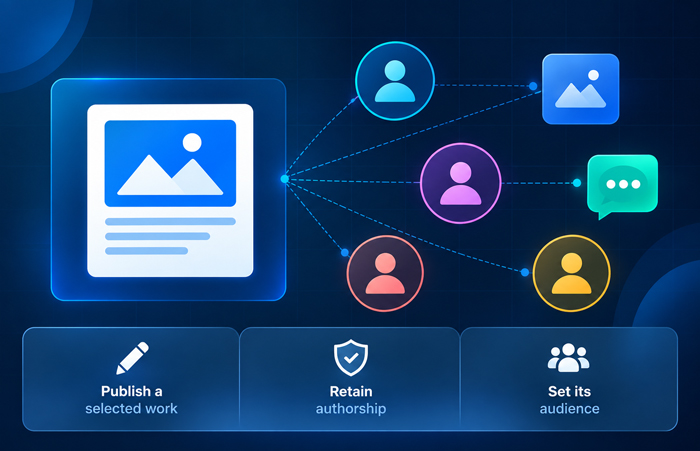
Media shared on ZKTOR is designed to remain within the platform. It cannot be freely downloaded, re circulated through external links, or used to create viral humiliation loops. This reduces the risk of non consensual spread while preserving the right to expression within a protected environment. Dignity, in this framework, is not enforced through surveillance or constant moderation. It is protected by removing the vectors through which harm typically escalates.

Expression Without Political Policing

ZKTOR does not position itself as an arbiter of political thought, ideology, or public opinion. The platform neither engages in political censorship nor applies ideological classification to users or content. Expression on ZKTOR is governed by clearly defined boundaries related to harm, abuse, and incitement, not by disagreement, dissent, or viewpoint diversity. This distinction is essential in plural societies, where democratic discourse relies on the ability to question, challenge, and disagree without fear of suppression or algorithmic penalty.

By separating safety enforcement from opinion control, ZKTOR seeks to preserve open discourse while maintaining clear limits against abuse and hatred. This balance reflects an understanding that trust in digital spaces erodes when platforms are perceived as silent political actors.

Communication Designed for Trust

ZKTOR includes integrated messaging systems designed with the same principles that govern its broader architecture. Text, audio, and video communication are encrypted and structured to prioritise privacy and consent. Group interactions are designed to minimise misuse while enabling community connection. Communication within ZKTOR is treated as a personal space rather than a data source. This approach allows users to interact freely without the assumption that private expression will later be analysed, monetised, or repurposed.

Communities That Reflect Real Life

ZKTOR is designed to support communities that reflect real social geography rather than abstract networks. Hyperlocal groups, interest based clubs, and regional communities allow users to engage in spaces that align with their lived environment. This structure supports meaningful participation without forcing visibility at scale. Local voices are not required to compete with global trends in order to be heard. By grounding interaction in proximity and shared context, ZKTOR encourages healthier forms of engagement that mirror offline social dynamics.

A Platform Built for the Long Term

ZKTOR is not designed for rapid cycles of attention or viral amplification. It is built for durability. Its architecture prioritises stability, data sovereignty, and compliance across jurisdictions. Region based data handling ensures that information remains aligned with local legal and cultural expectations. These choices reflect a long term outlook where trust and resilience matter more than immediate growth metrics. The platform’s development acknowledges that digital public spaces will increasingly be judged not by scale alone, but by how responsibly they manage power over time.

ZKTOR is being built as a public digital space designed with dignity at its core. It protects privacy by design, supports safety without surveillance, and enables expression without political control. Its purpose is not to capture attention, but to create an environment where trust, participation, and human agency can endure.

Architecture Designed for Sovereignty and Trust

ZKTOR is architected with the understanding that digital systems now function as social infrastructure. As such, their design must account not only for performance, but for sovereignty, accountability, and resilience. ZKTOR operates on a region aware architectural model that respects data sovereignty by design. User data is handled within clearly defined geographic boundaries, aligned with local legal, cultural, and regulatory contexts. This approach reduces systemic risk, limits overreach, and ensures that digital participation does not require surrendering control to distant or opaque systems.

The platform’s technical design prioritises structural limitation over discretionary control. Instead of relying on policy promises or post facto enforcement, ZKTOR embeds boundaries directly into its architecture. This ensures that privacy, safety, and autonomy remain intact regardless of scale, growth, or operational pressure.

Zero Knowledge Systems and Encrypted Communication

ZKTOR’s core systems are built around a zero knowledge philosophy, where servers are structurally restricted from accessing the content of private communication. End to end encryption protects messaging across text, audio, and video formats, ensuring that personal interaction remains personal. This approach recognises that private communication is foundational to trust, and that trust cannot coexist with routine inspection or analysis.

By removing the ability to routinely observe private exchanges, ZKTOR reduces the temptation and the capacity for misuse. Communication is treated as a protected space rather than a data stream, reinforcing the principle that expression does not require exposure.

Media Without External Exploitation

One of the defining architectural choices within ZKTOR is the deliberate restriction on external media circulation. Images and videos shared within the platform are designed to remain within its boundaries, limiting the ability to download, replicate, or redistribute content through external channels. This design choice addresses a common source of harm in digital spaces, where content is removed from its original context and used for harassment or coercion.

By removing these circulation vectors, ZKTOR reduces the likelihood of harm without requiring constant monitoring. Safety is achieved through prevention rather than reaction, reinforcing dignity while preserving expression.

Artificial Intelligence with Defined Limits

Artificial intelligence within ZKTOR operates strictly within purpose defined boundaries. Its role is limited to identifying certain categories of harm that threaten safety and dignity. It does not analyse personal beliefs, political views, or behavioural patterns. It does not score users, predict intent, or rank trustworthiness.

AI generated signals are reviewed through structured human processes designed around context and proportionality. This ensures that automated assistance does not become automated judgment. By limiting the scope of intelligence, ZKTOR maintains a clear separation between safety support and behavioural control.

An Economic Model Without Surveillance

ZKTOR’s economic design reflects its broader philosophy. The platform does not rely on behavioural tracking, profiling, or surveillance driven advertising. Instead, it supports a hyperlocal advertising model aligned with geographic relevance rather than personal inference. Advertisements are served based on location and context, not on extracted behavioural data.

This approach allows local businesses, creators, and organisations to reach relevant audiences without compromising user privacy. Economic participation remains transparent and proportionate, reinforcing trust between users, advertisers, and the platform.

Creator Centric Value Distribution

ZKTOR recognises creators as contributors to public digital culture rather than sources of extractable value. The platform supports creator monetisation models designed to reward contribution without dependency on manipulation or virality. Revenue sharing mechanisms prioritise fairness and sustainability, enabling creators to participate economically without aligning their work to engagement driven distortion.

By decoupling creative value from algorithms, ZKTOR supports a healthier creative ecosystem where quality, relevance, and authenticity endure.

Employment Through Hyperlocal Infrastructure

ZKTOR’s design supports the creation of distributed, hyperlocal employment opportunities. Community moderation, local operations, content stewardship, and technical coordination are structured to operate at district and regional levels. This model allows talent from rural and semi urban regions to participate meaningfully in the digital economy without migrating to centralised hubs.

Employment within the ZKTOR ecosystem is aligned with local language, cultural understanding, and contextual knowledge. This approach treats local familiarity as capability rather than limitation, supporting inclusive economic participation.

ZKTOR as Public Digital Infrastructure

Beyond its role as a social platform, ZKTOR functions as a layer of digital public infrastructure. It supports community interaction, local economies, creative expression, and civic dialogue within a single, coherent system. Its architecture enables participation without dependency on surveillance, and connection without exposure to systemic risk. This infrastructure role becomes increasingly important as digital spaces influence governance, culture, and social cohesion. ZKTOR’s design reflects an understanding that public digital spaces must be built with the same care as physical civic environments.

Integration Within the Softa Ecosystem

ZKTOR operates within the broader Softa ecosystem alongside initiatives such as HOLA AI, Subkuz, and EZOWM. Each component retains clear boundaries of purpose and governance. HOLA AI provides a restraint oriented intelligence layer, Subkuz operates as an independent media institution, and EZOWM supports hyperlocal commerce. ZKTOR serves as the applied public space where these principles converge. This separation ensures alignment does not become dependency, and each system retains integrity while contributing to a shared vision of responsible digital infrastructure.

Governance as a Design Choice

ZKTOR approaches governance as a design responsibility rather than a reactive function. Digital platforms increasingly influence public discourse, social norms, and civic behaviour, yet governance is often treated as an afterthought addressed through policy updates or enforcement cycles. ZKTOR adopts a different posture. Governance principles are embedded into its architecture, operational processes, and decision making frameworks from the outset. This approach recognises that responsible digital spaces must be governed not only by rules, but by systems that limit power, reduce asymmetry, and prioritise accountability.

Human Judgment at the Center

While technology assists in identifying risk, final authority within ZKTOR remains human. Automated systems do not issue bans, remove accounts, or make irreversible decisions. Human review processes are designed to evaluate context, intent, and proportionality, recognising that digital expression cannot be accurately assessed through pattern recognition alone. Appeals and restoration mechanisms exist to correct error and prevent permanent exclusion based on misinterpretation. This commitment reflects an understanding that governance without human judgment quickly becomes mechanical and unjust.

Legal Alignment Without Dependency

ZKTOR is designed to operate within diverse legal environments without becoming dependent on any single jurisdiction’s interpretation of control. Its region aware architecture aligns data handling with local legal requirements while maintaining consistent core principles of privacy, dignity, and restraint. By embedding compliance into system design rather than relying solely on external enforcement, ZKTOR reduces friction with regulators and increases resilience as legal frameworks evolve. This posture allows the platform to adapt responsibly without compromising its foundational values.

Law Enforcement Interface with Limits

ZKTOR acknowledges lawful processes while maintaining strict boundaries around user data and privacy. Requests for information are addressed within defined technical and legal constraints. Decrypted personal content is not routinely accessible, and cross border data sharing is not enabled by default. High level or exceptional requests are subject to structured review processes rather than discretionary access. This approach balances cooperation with lawful authority and protection against overreach, ensuring that user trust is not undermined by opaque or excessive disclosure.

Clear Boundaries of Authority

ZKTOR maintains clear boundaries between platform responsibility and user autonomy. The platform does not position itself as an arbiter of truth, morality, or political legitimacy. Its authority is limited to maintaining safety, dignity, and functional integrity of the digital space. Decisions affecting users are guided by defined criteria related to harm rather than ideology or opinion. This clarity of authority reduces ambiguity, limits overreach, and strengthens trust by ensuring that governance actions remain predictable and proportionate.

Digital Dignity as a Societal Standard

ZKTOR treats digital dignity not as a feature or benefit, but as a baseline expectation. The platform recognises that dignity online is increasingly inseparable from dignity offline, particularly for women, youth, and marginalised communities. By removing structural vectors of harm and reducing exposure to abuse, ZKTOR seeks to normalise environments where participation does not require resilience to constant risk. This standard setting approach reflects a belief that safer digital spaces strengthen democratic participation and social cohesion.

Transparency Through Structure

Rather than relying on frequent public statements or reactive disclosures, ZKTOR emphasises structural transparency. Its systems are designed so that certain forms of misuse, surveillance, and manipulation are not technically possible. This form of transparency reduces dependence on trust in intent and shifts emphasis toward trust in design. Users do not need to interpret complex policies to understand their rights; those rights are enforced by architecture.

A Platform Designed for Plural Societies

Plural societies require digital spaces that can accommodate disagreement without descending into hostility and diversity without fragmentation. ZKTOR’s governance philosophy acknowledges this complexity. It does not attempt to engineer consensus or suppress conflict, but to provide boundaries within which disagreement can occur without dehumanisation. By focusing on harm rather than belief, ZKTOR supports discourse that is robust without becoming destructive.

National Relevance Without Centralisation

ZKTOR’s architecture supports national scale participation without centralising control. Hyperlocal structures, regional data handling, and distributed operational models allow the platform to scale while remaining grounded in local realities. This decentralised approach reduces systemic risk and aligns with the needs of large, diverse societies where uniform solutions often fail. ZKTOR’s relevance at national scale emerges from aggregation of local participation rather than top down orchestration.

A Long Term Institutional Outlook

ZKTOR is not conceived as a short term product or market opportunity. It is being developed with an institutional outlook that prioritises durability over momentum. Its success is not measured solely by user numbers or engagement metrics, but by whether it sustains trust, safety, and relevance as technologies and societies evolve. This outlook reflects an understanding that digital public spaces increasingly function as civic infrastructure, carrying responsibilities that extend across generations.

Designed for Continuity, Not Momentum

ZKTOR is not built to chase momentum or dominate attention cycles. Its architecture prioritises continuity, resilience, and trust over rapid expansion. Growth is approached as a function of reliability rather than virality. This long term outlook recognises that digital platforms increasingly carry responsibilities that extend beyond market success into social stability.

By designing for continuity, ZKTOR seeks to remain relevant and trustworthy as technologies, regulations, and social expectations evolve. ZKTOR is being built as a public digital infrastructure that combines architectural privacy, non extractive economics, and hyperlocal participation. It supports expression without exposure, community without surveillance, and economic activity without behavioural exploitation. Its purpose is not to optimise attention, but to sustain trust over time.

Global Readiness with Context

While designed within the Indian context, ZKTOR’s principles resonate with global concerns around privacy, safety, and platform power. Its emphasis on restraint, non extractive economics, and architectural governance offers relevance to regions navigating similar challenges. ZKTOR does not position itself as a universal solution, but as an example of how digital public spaces can be designed with context, accountability, and long term responsibility.

ZKTOR is being built as a public digital space governed by restraint, accountability, and respect for human agency. It protects dignity without surveillance, enables expression without political control, and supports participation without extraction. Its purpose is to contribute to a digital future where trust is structural, safety is foundational, and public life can endure.

back top

Scheduled Website Upgrade

ENG:
We are currently updating and upgrading our website to enhance performance, security, and user experience. We will be back online within 48–72 hours.

We appreciate your patience and apologize for any inconvenience.


HINDI:
हम अपनी वेबसाइट को बेहतर प्रदर्शन, सुरक्षा और उपयोगकर्ता अनुभव के लिए अपडेट/अपग्रेड कर रहे हैं। वेबसाइट अगले 48–72 घंटों में पुनः उपलब्ध होगी।

हमें हुई असुविधा के लिए खेद है और आपके सहयोग के लिए धन्यवाद।

Softa Technologies Limited (STL) | STL Europe Oy