

Government & Policy
Softa’s policy agenda brings digital dignity into practical questions of language access, local enterprise, responsible AI and platform accountability. Cooperation begins with a defined public need and an accountable scope.
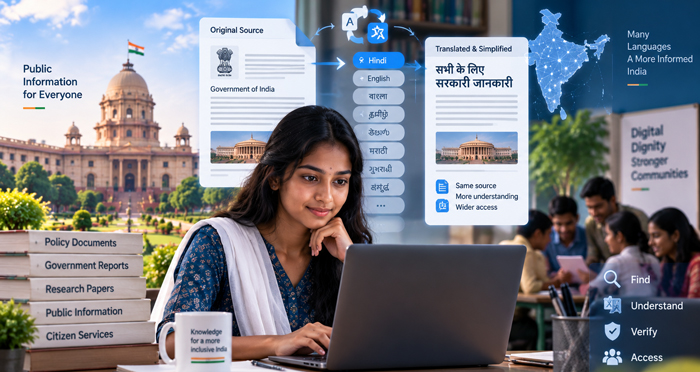
One proposed area for dialogue is the relationship between source-based information and language assistance. An institution may need public material to remain connected to its original source while becoming more understandable to a regional-language audience. KHOZU and HOLA provide distinct architectural roles for that inquiry.
A bounded pilot could examine whether participants find and understand the intended material, whether translations retain important qualifications and how errors are corrected. Such a proposal does not announce a deployed government system or imply that confidential beneficiary records will be admitted into a general model.
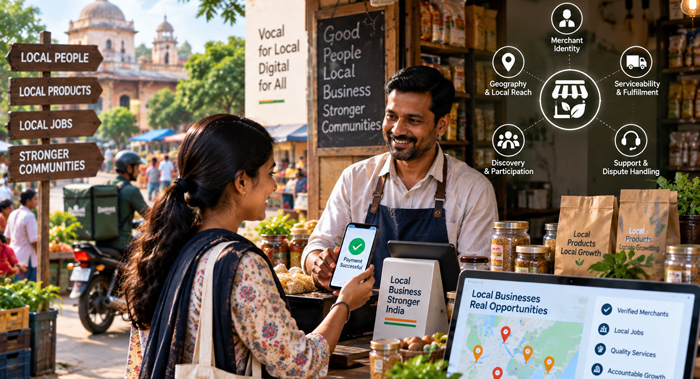
A second area concerns merchants and local service capability. EZOWM’s market-cell model treats geography, merchant identity, serviceability, fulfilment and remedy as connected responsibilities. Policy discussion can examine whether this structure supports useful local participation rather than merely increasing digital registrations.
A meaningful evaluation distinguishes merchant activity from company revenue and direct employment from other forms of participation. Local skills, support quality and dispute handling matter alongside discovery. The scope of any actual pilot or procurement would require its own agreement and operating records.
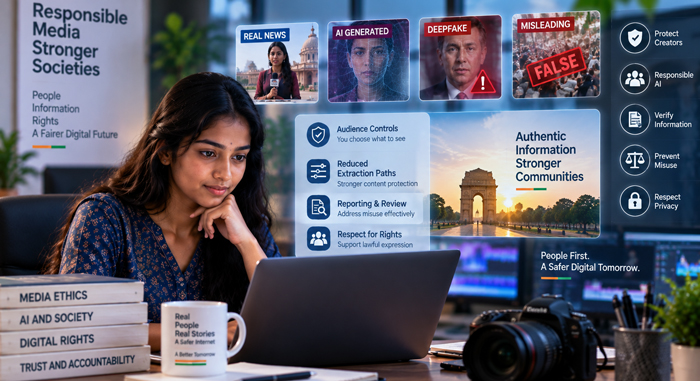
A third area concerns participation in the AI and synthetic-media era. Audience controls and reduced extraction paths can address exposure, while reporting and review address misuse after it occurs. The company’s No-URL proposition is one component, not a universal cure for copying or deepfakes.
Institutional cooperation should preserve lawful expression, source protection and individual rights. The relevant question is how a service can reduce harm and provide usable remedy, not how it can obtain unrestricted access to private communication.

The proposed public-interest compact connects the problem, intended participants, baseline, measurable outcome, delivery actor, permitted data and support responsibilities. It also includes conditions for correction, suspension and exit. These are elements of a proposed engagement, not evidence that a government has adopted the model.
The contact route is for policy dialogue, research cooperation and properly scoped service discussions. The current company funding stance is not used as a grant-solicitation banner, and no government logo or venue is presented as endorsement.
OUR PURPOSE
Softa is building a connected technology ecosystem around privacy, participation and practical human needs creating digital systems designed to remain useful, responsible and inclusive as they grow.
