S O F T A
Home / The People-First Internet

THE PEOPLE-FIRST INTERNET

More capability. Less intrusion.

Softa is building software, AI and digital platforms that expand human capability while keeping privacy and control at the centre. Technology should become more useful and intelligent without demanding unnecessary access to people's lives.

People

TECHNOLOGY

INTELLIGENCE

PRIVACY

CONTROL

01

HUMAN
CAPABILITY

Technology should expand human capability

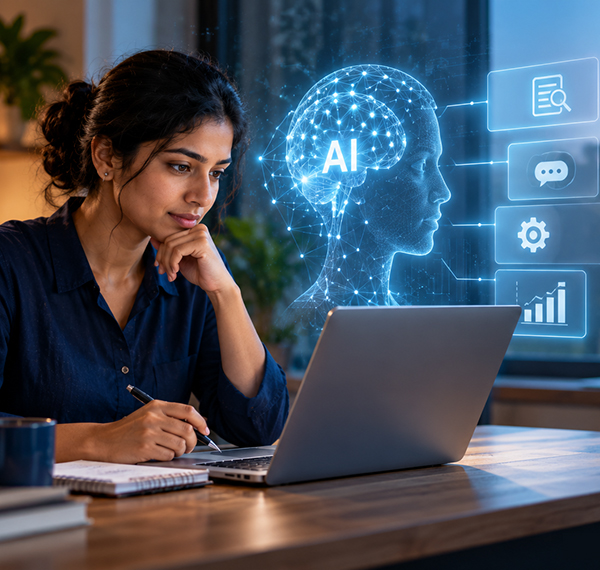
The most useful technology does more than automate tasks. It helps people understand information, communicate more effectively, discover opportunities and complete complex work with less friction. Software should extend human capability while keeping the person using it at the centre of the experience. The objective is not technology with fewer capabilities. It is more capable technology with clearer boundaries.

Across Softa's technology ecosystem, this principle influences how we think about intelligent assistance, communication, discovery and digital services. AI can explain, recommend and accelerate work. Digital platforms can connect people and information at scale. But greater technical capability should not require users to surrender unnecessary control over their identity, information or decisions.

Visibility and responsible digital participation
02

PRIVACY &
ARCHITECTURE

Responsible artificial intelligence

Privacy should be part of the architecture

Privacy is strongest when it is considered before a service is launched, not added later as a collection of settings and notices. A technology platform should understand what information it actually needs, why it needs it and what authority exists for each subsequent use. Publishing information, receiving a personalised recommendation, communicating privately and authorising an automated action are different interactions. One should not silently create permission for another.

Systems can preserve these distinctions through deliberate product architecture, access controls and clearly defined permissions. For Softa, privacy and usefulness are therefore not opposing objectives. The engineering challenge is to create relevant and intelligent services while reducing unnecessary access to personal information. As systems become more powerful, their boundaries should become easier for users and organisations to understand.

MORE INTELLIGENCE. MORE CAPABILITY.
NOT MORE UNNECESSARY ACCESS.

As technology becomes more capable, its boundaries should become clearer's not disappear.

01

USER CONTROL

02

PRIVACY BY DESIGN

03

RESPONSIBLE INTELLIGENCE

03

AI &
HUMAN CONTROL

AI should assist, not silently take control

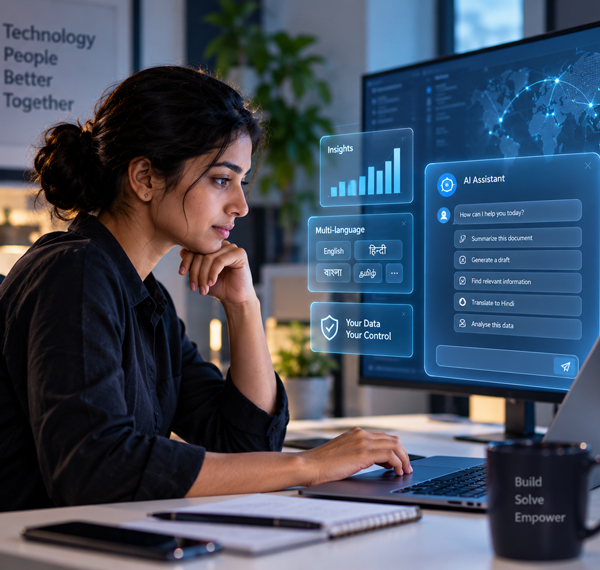
Artificial intelligence can explain a document, summarise information, prepare a draft, identify patterns or recommend a next step. These capabilities can significantly reduce complexity, but assistance and authority are not the same thing. An AI system helping an employee understand an invoice does not automatically have authority to change its value, approve it or release a payment.

A system preparing a communication does not necessarily have permission to send it. Remembering information, generating an answer and taking an external action can each require different levels of permission. This distinction informs Softa's approach to intelligent systems, including HOLA AI. The aim is to develop AI that can become increasingly useful while keeping consequential authority visible and controllable. Human oversight should not disappear simply because software becomes more intelligent.

Local communities and regional opportunity
04

TECHNOLOGY IN
PRACTICE

Institutional leadership and accountable technology

Technology should work in the real world

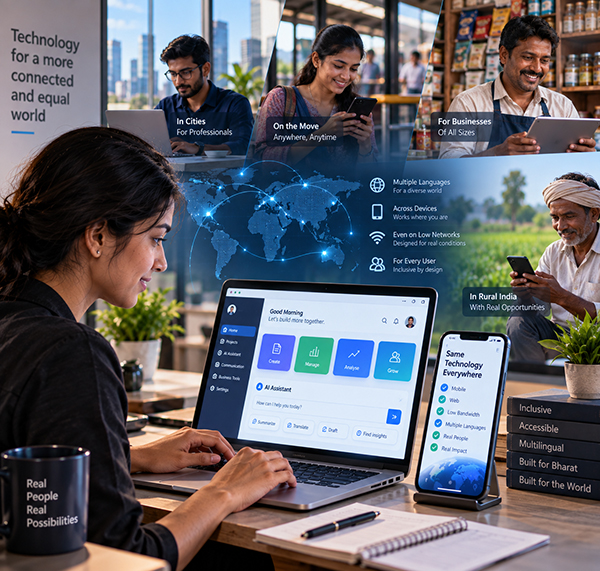
Advanced technology creates value only when people can actually use it. Languages, devices, network conditions, business environments and levels of digital familiarity differ significantly across markets. Software designed around a narrow technical environment can exclude users even when the underlying technology is powerful. Softa's approach is to treat these differences as engineering requirements rather than peripheral considerations. Multilingual intelligence, efficient interfaces, contextual discovery and adaptable digital services can help technology operate across different environments without reducing every user to the same assumptions.

05

OUR
DIRECTION

A principle that can be tested in technology

The People-First Internet is not a claim that every technology challenge has already been solved. It is a direction against which Softa's products, architecture and decisions can be examined.

The test is practical: Does the technology create meaningful capability? Are its boundaries understandable? Does the user retain appropriate control? Can intelligence increase without unnecessary intrusion?

As Softa's technology ecosystem develops, these questions provide a consistent standard for building software intended to remain useful, responsible and relevant at scale.

OUR PURPOSE

Technology built around people. Progress built to last.

Softa is building a connected technology ecosystem around privacy, participation and practical human needs creating digital systems designed to remain useful, responsible and inclusive as they grow.

People First
Privacy by Design
Purposeful Innovation
Global Perspective