


LANGUAGES & COMMUNITY KNOWLEDGE
Language carries more than words.
Meaning, place and cultural authority travel together. A useful multilingual system must preserve that context as it helps people understand and contribute.
Preserve meaning rather than surface fluency
Translation, transliteration, transcription and explanation are different operations. A sentence can read smoothly while changing a qualification, a technical term or the speaker's intention. HOLA's framework asks that source context and uncertainty remain visible where they are material.
Names, place terms, scripts and code-mixed speech can carry identity. Aggressive normalisation may make a system appear simpler while erasing information the speaker intended to preserve. The appropriate method depends on the task and language context.

Knowledge remains connected to its source
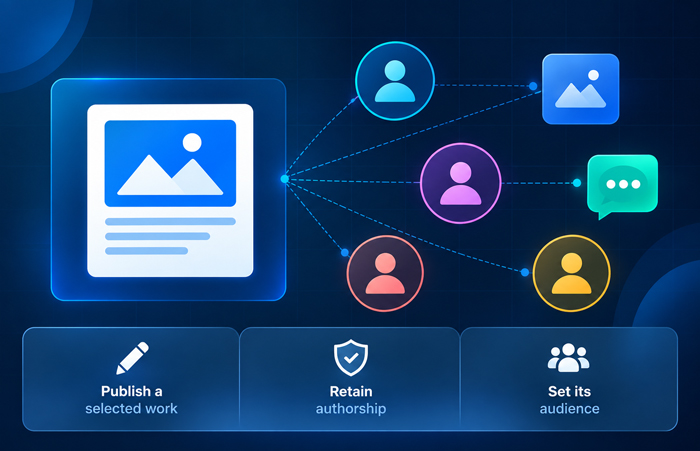
The community-knowledge architecture separates capture, archival access, training, publication, transfer and commercial use. Each can require a different permission. Context includes language, place, speaker or community, practice, uncertainty and restrictions.
Attribution and agreed reciprocity are part of the relationship. A community may correct, contextualise, restrict or seek withdrawal of material. The framework does not treat digitisation as ownership or synthetic reconstruction as authentic testimony.

Quality is local and task-specific
A supported-language list does not establish identical performance in every dialect or domain. Search, translation, harm assessment and speech processing can require different evaluation material and expertise. Meaning preservation and harmful error are more relevant than an undifferentiated claim of multilingual capability.
The programme's actual languages, scripts, tasks and modes require their release-specific record. The long-term objective is access that respects people's context—not a claim that every Indian or South Asian language is already fully supported.